
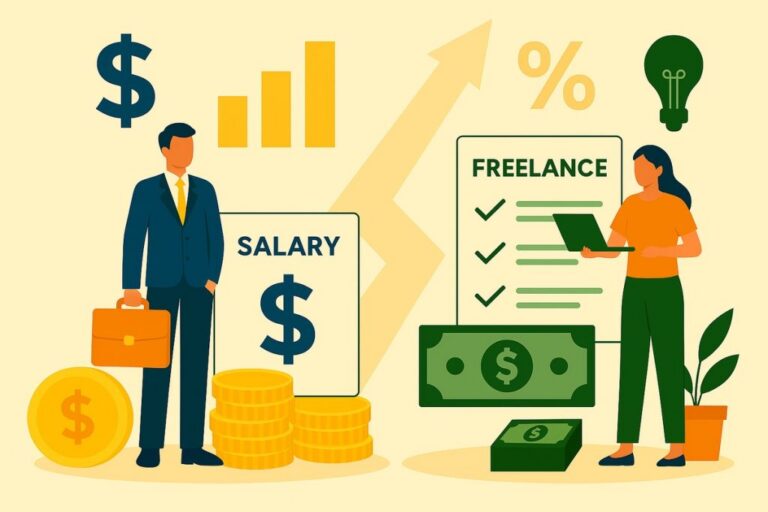
The modern workforce is more diverse than ever, with people choosing different paths to make a living. Some find comfort in the steady paycheck of a salaried job, while others chase independence through self-employment. Both lifestyles come with their own set of rewards and challenges, but few people realize just how different their financial worlds truly are.
When it comes to finances, the contrast between salaried employees and self-employed workers goes beyond how they earn their money—it’s about how they plan, save, and adapt. Understanding these differences is essential not only for personal budgeting but also for long-term financial growth.
Stability versus flexibility—two financial realities

One of the clearest distinctions between salaried employees and self-employed individuals lies in income stability. Salaried workers typically enjoy consistent monthly paychecks, benefits like health insurance, and sometimes retirement contributions from their employers. This stability allows for easier budgeting and long-term planning, which can make managing household expenses less stressful.
Self-employed workers, however, live in a different rhythm. Their income can fluctuate dramatically from month to month, depending on client demand, seasonal trends, or personal productivity. While this can be intimidating, it also offers freedom—the ability to set one’s own rates, work hours, and career direction.
The emotional side of financial security
Financial stability is not only about numbers—it’s about peace of mind. Salaried employees often find comfort in knowing exactly how much money will arrive each month, which reduces anxiety and helps them plan ahead confidently. The predictability of benefits such as paid time off and health coverage further reinforces a sense of security.
For the self-employed, financial uncertainty can be both a motivator and a stressor. Some thrive on the challenge of creating their own income, while others struggle with the unpredictability. Success in this environment often depends on developing emotional resilience and building systems—like emergency funds—that help cushion the ups and downs.
Taxes, savings, and long-term planning
Taxes represent one of the biggest differences between salaried and self-employed workers. Employees have taxes automatically deducted from their paychecks, simplifying the process. Employers also contribute to Social Security and Medicare, reducing the employee’s burden. For the self-employed, however, taxes are more complex—they must calculate and pay estimated taxes quarterly, cover the full self-employment tax, and maintain detailed records throughout the year.
When it comes to savings, salaried employees often benefit from automatic payroll deductions into retirement accounts like 401(k)s, sometimes matched by employers. Self-employed individuals, on the other hand, must be proactive—opening and funding their own retirement accounts, such as SEP IRAs or solo 401(k)s.
Managing irregular income and budgeting smartly
For the self-employed, one of the hardest financial habits to master is budgeting with irregular income. The key is to base monthly spending on the lowest expected income rather than the highest, ensuring that slower months don’t cause financial strain. Building a separate account for taxes and savings helps maintain order and prevent surprises.
Technology can also help bridge the gap. Budgeting apps, expense trackers, and accounting tools allow freelancers and entrepreneurs to gain real-time insight into their cash flow. By treating their personal finances like a business, self-employed workers can achieve a level of control similar to that of their salaried counterparts.
Finding balance in different financial paths
Ultimately, neither path is superior—they simply serve different lifestyles and goals. Salaried employees often prioritize stability, predictable growth, and work-life balance, while self-employed workers value freedom, creativity, and the potential for higher earnings. Understanding the strengths and weaknesses of each model empowers individuals to plan strategically and align their finances with their personal values.
In the end, financial success depends less on how you earn and more on how you manage what you earn. Whether you receive a paycheck or write your own invoices, consistency, planning, and awareness are what truly create long-term financial well-being.